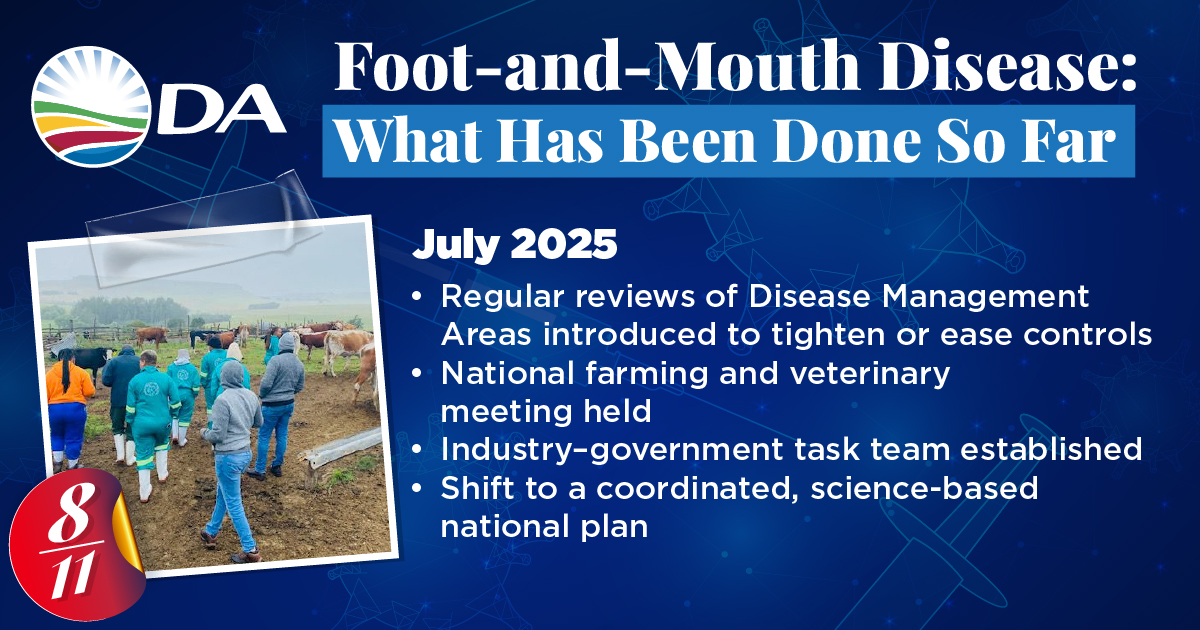
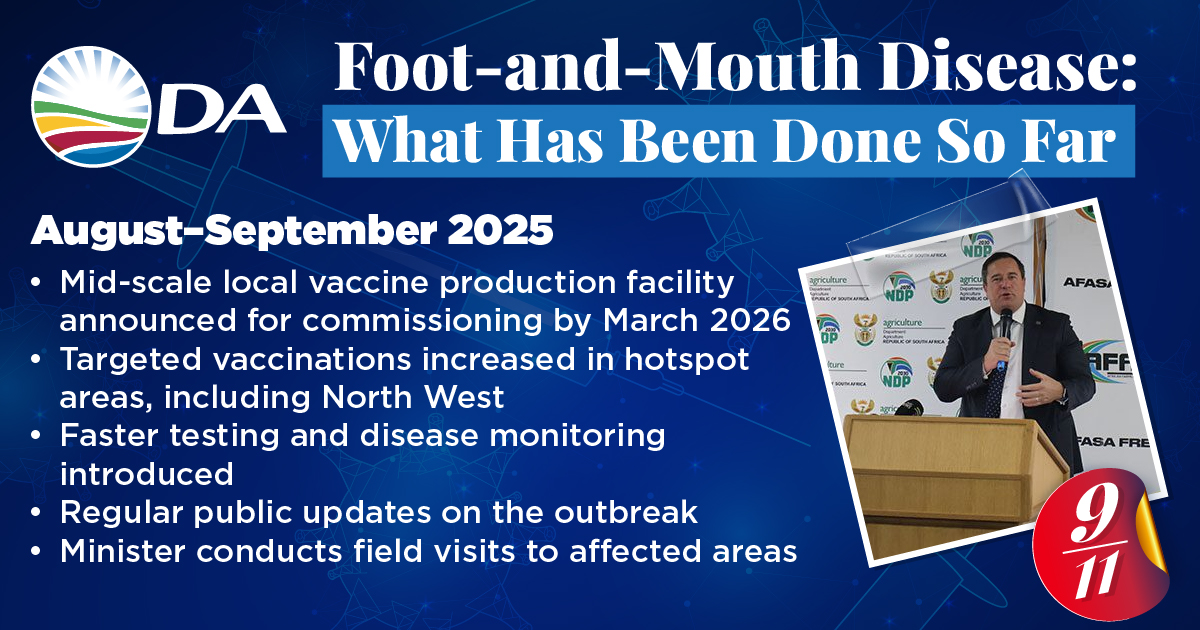
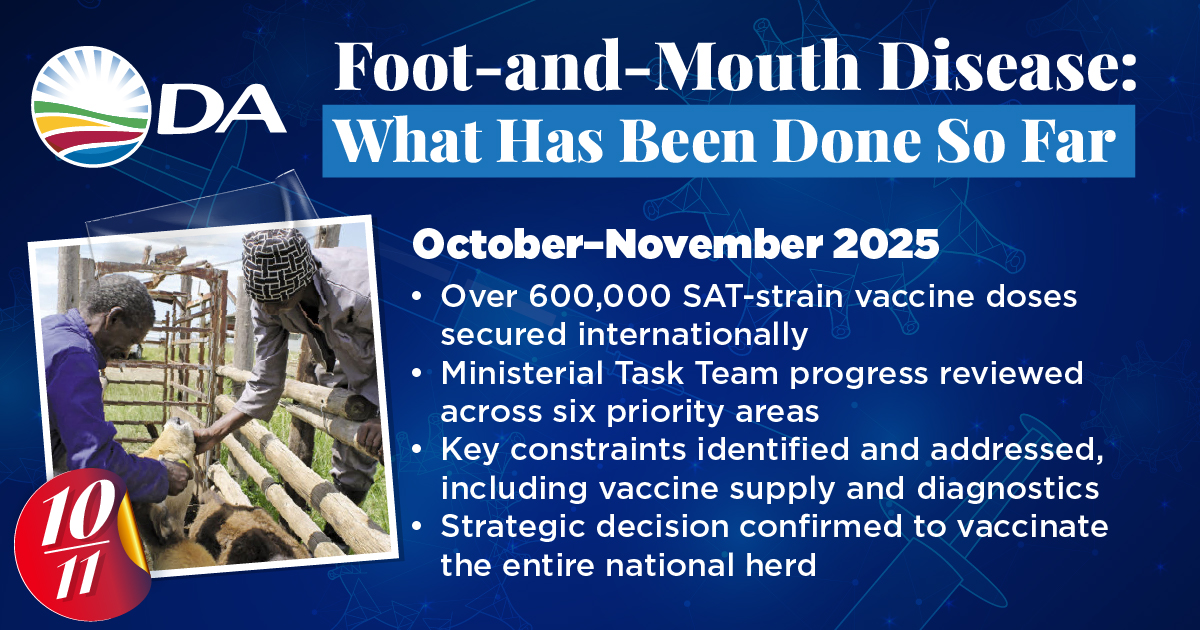
Latest Update | February 2026
South Africa has restarted local production of Foot-and-Mouth Disease vaccines for the first time in 21 years, with initial batches now being produced at the Agricultural Research Council (ARC) Onderstepoort Veterinary Research campus under Minister of Agriculture John Steenhuisen.
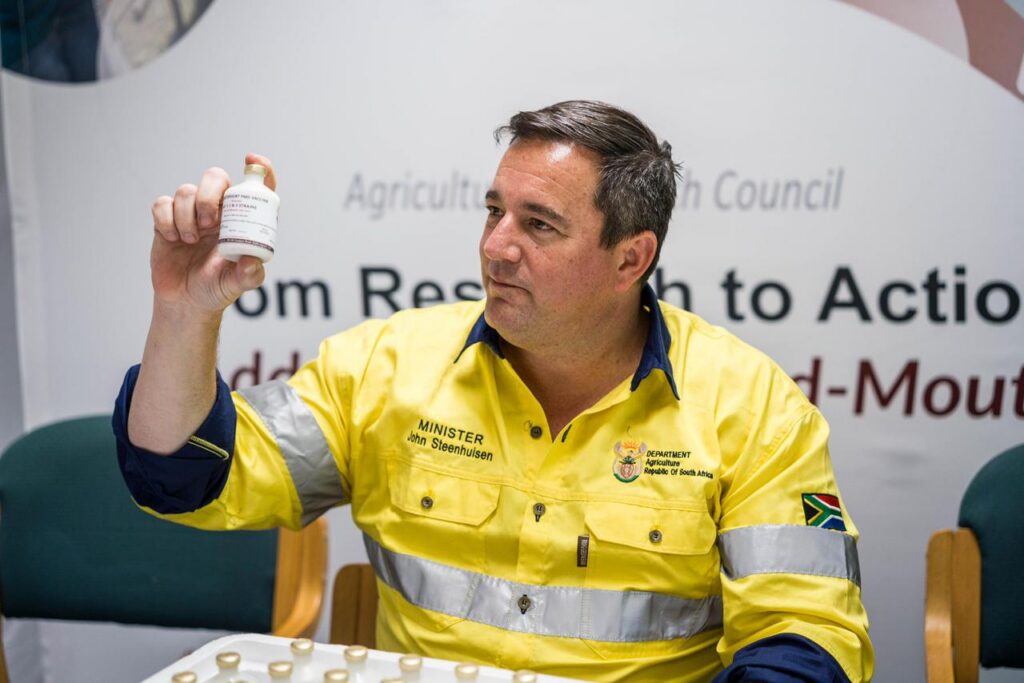
This breakthrough comes as South Africa faces one of its most severe FMD outbreaks in decades. By the end of January 2026, nearly 2 million animals had already been vaccinated, and the restart of domestic production will help bridge the gap while additional imported vaccine doses arrive, strengthening supply and response capacity.
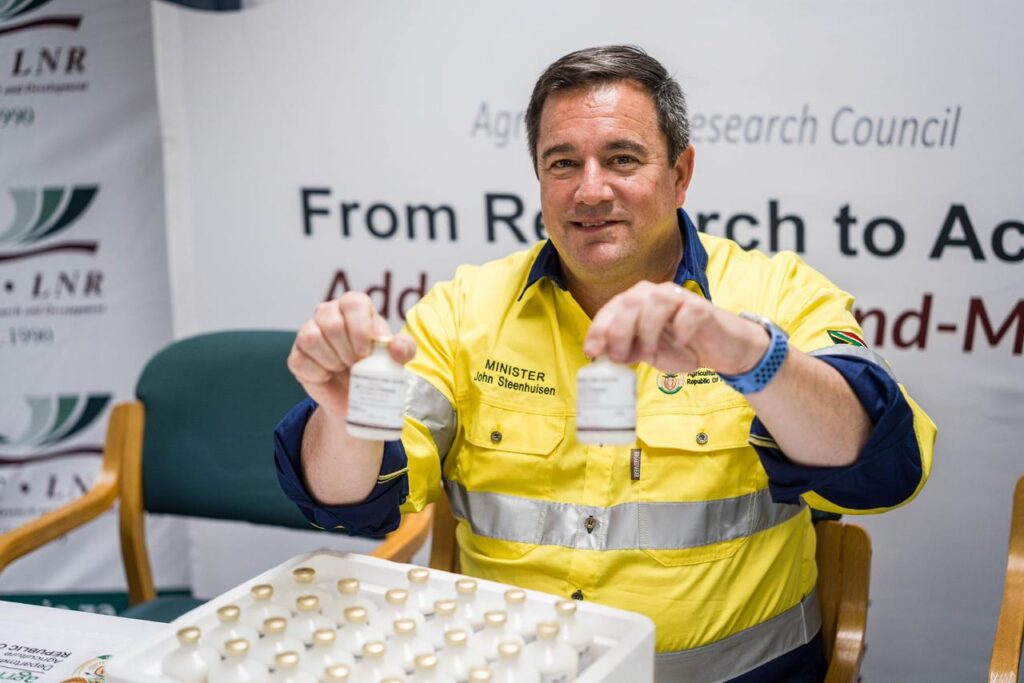
The Democratic Alliance strongly supports Minister Steenhuisen’s call for the outbreak to be declared a national disaster, to unlock faster coordination, resources, and enforcement to protect farmers, food security, and rural jobs.
A DA-led national response to protect farmers, jobs and food security
South Africa has stepped up its response to Foot-and-Mouth Disease through mass vaccination, stricter movement controls, and stronger enforcement to stop the spread of the disease and protect the agricultural sector.
Leadership that acts
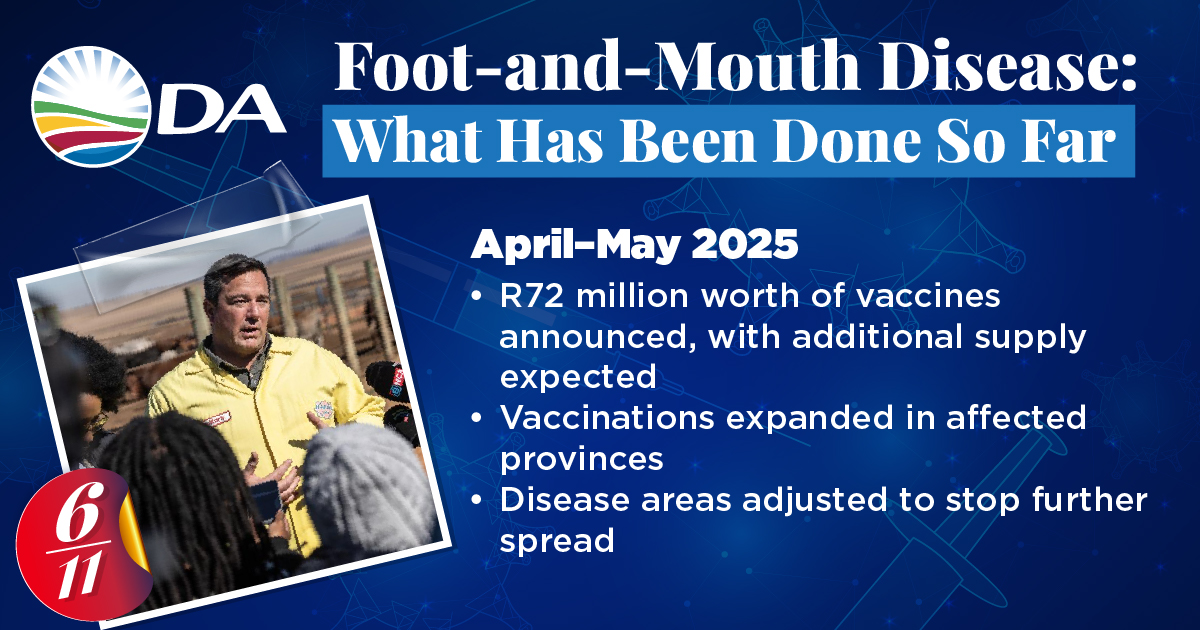
Under the leadership of DA Federal Leader and Minister of Agriculture, John Steenhuisen government has moved decisively to confront Foot-and-Mouth Disease.
The response is focused on:
- mass vaccination,
- faster testing and surveillance,
- stricter enforcement of animal movement rules, and
- fixing the systems that allowed the disease to spread.
This reflects the Democratic Alliance’s approach: act early, follow the science, and protect livelihoods.
What is Foot-and-Mouth Disease?
Foot-and-Mouth Disease (FMD) is a highly contagious viral disease that affects cloven-hoofed animals such as cattle, sheep, goats and pigs.
It is not a food safety risk for people, but it causes serious economic harm if not controlled. Outbreaks reduce production, restrict trade, threaten jobs, and damage farming communities.
What government is doing now
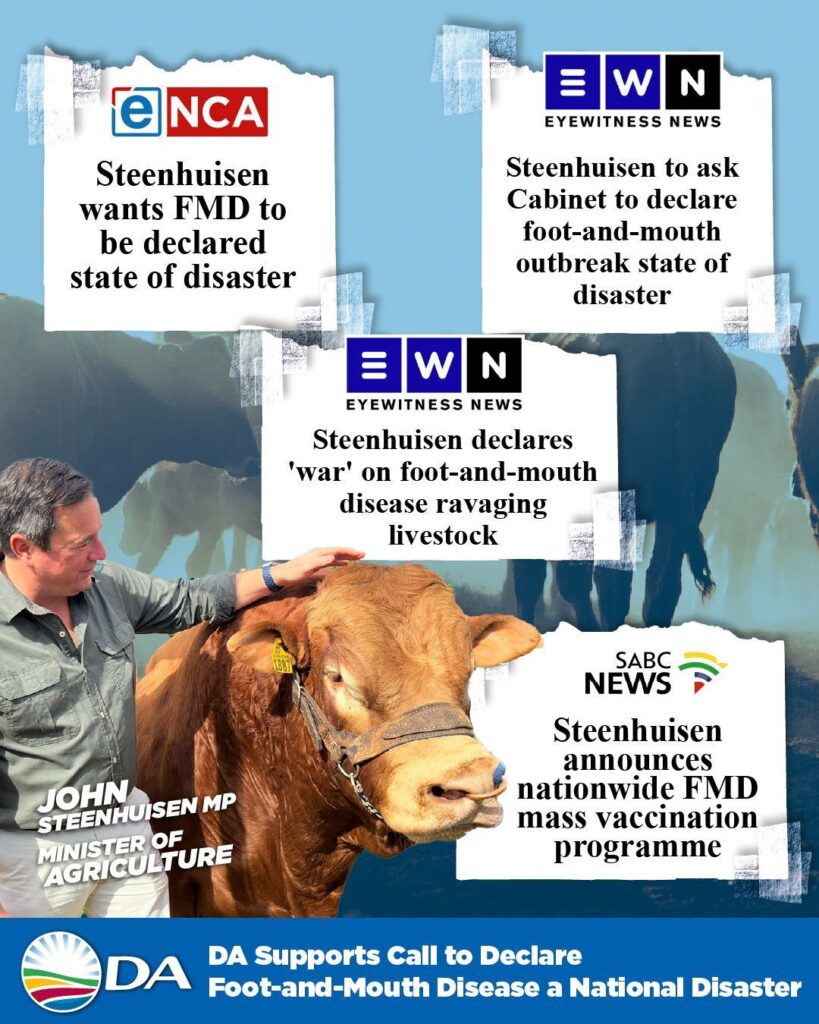
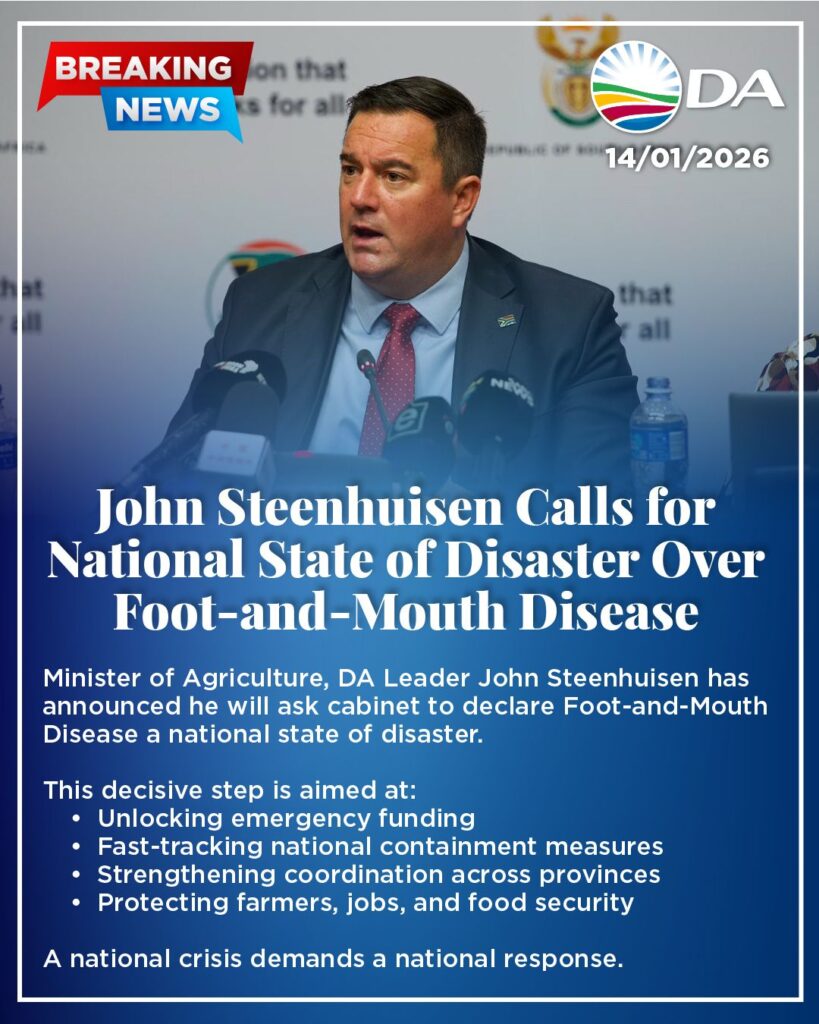
On 14 January 2026, the Minister of Agriculture announced that he will ask Cabinet to declare Foot-and-Mouth Disease a National State of Disaster.
This allows government to move faster and bring more resources to the fight against the disease.
What a State of Disaster means in practice
It does not mean panic or food shortages.
It allows government to:
- act faster,
- coordinate nationally,
- bring in law enforcement support,
- unlock emergency resources.
Action on the ground
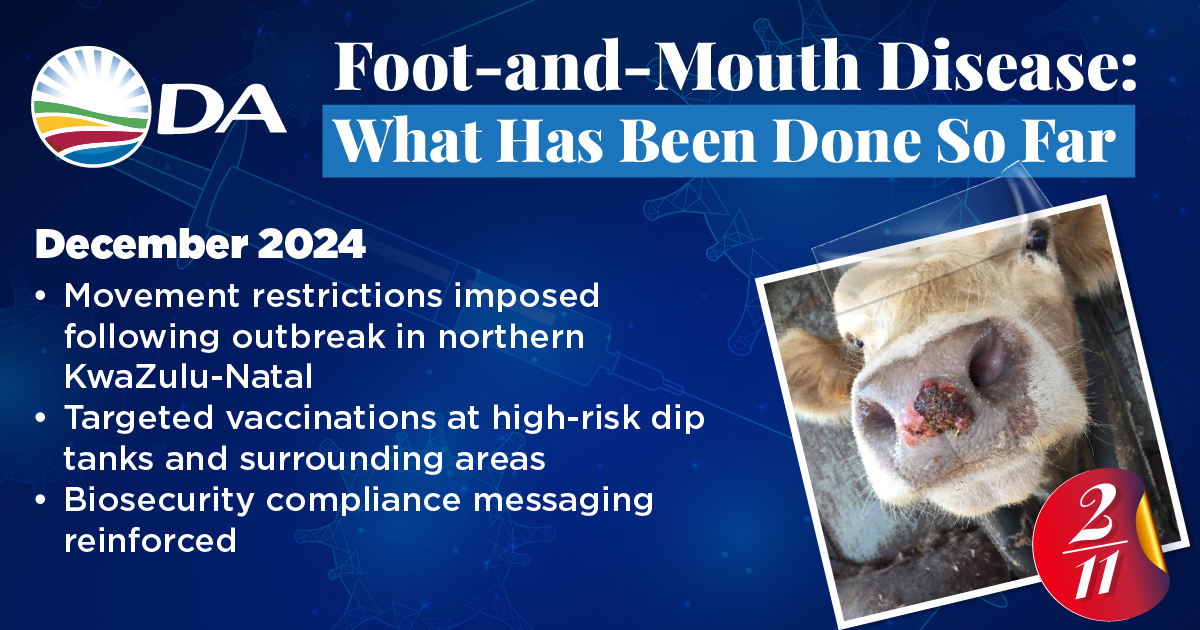
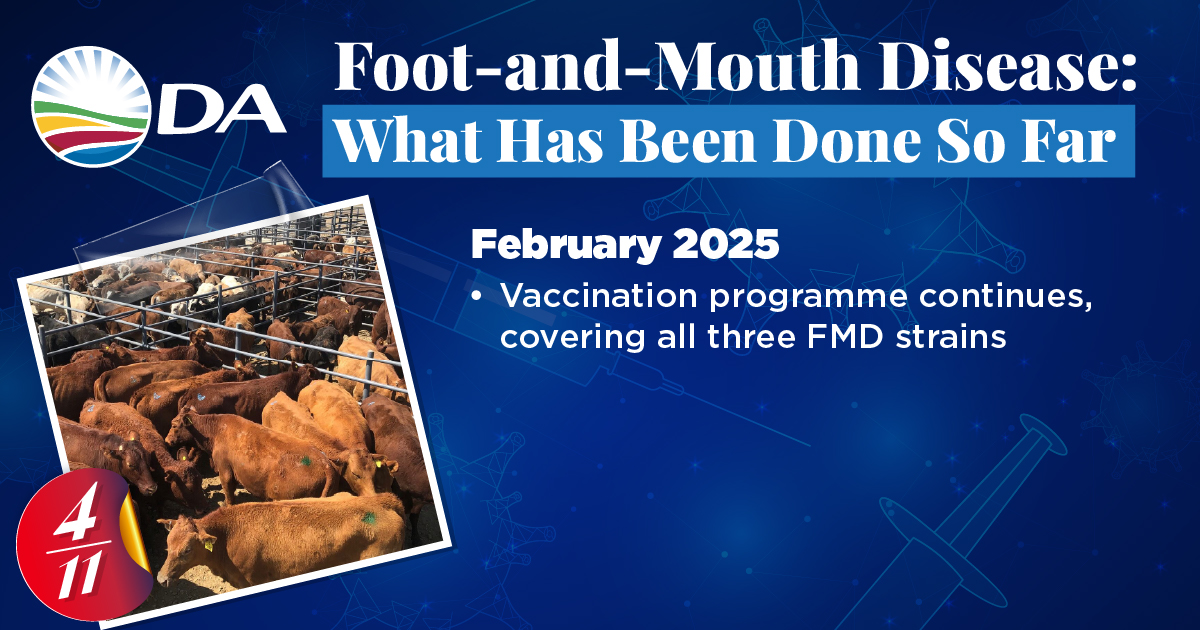
Vaccination underway
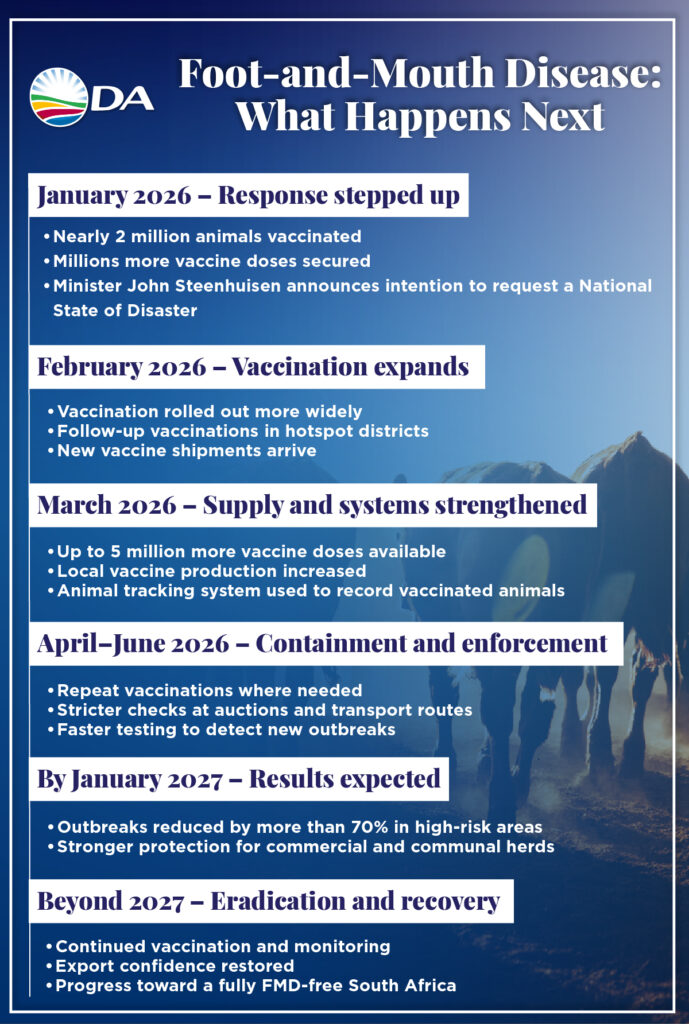
- Nearly 2 million animals have already been vaccinated.
- Further Mass vaccination is planned for the hardest-hit provinces: KwaZulu-Natal, Gauteng, Free State and North West.
- Vaccinations will be repeated within three months to protect feedlots, dairy herds, and commercial and communal livestock.
Vaccine supply secured
- 1 million vaccine doses are arriving in the coming weeks.
- A further 5 million doses are secured by March 2026.
- Supply has been expanded through local production and approved international suppliers, including the high-potency Dollvet vaccine from Turkey.
Faster testing and stronger enforcement
- Testing capacity has been expanded to allow faster detection of new cases.
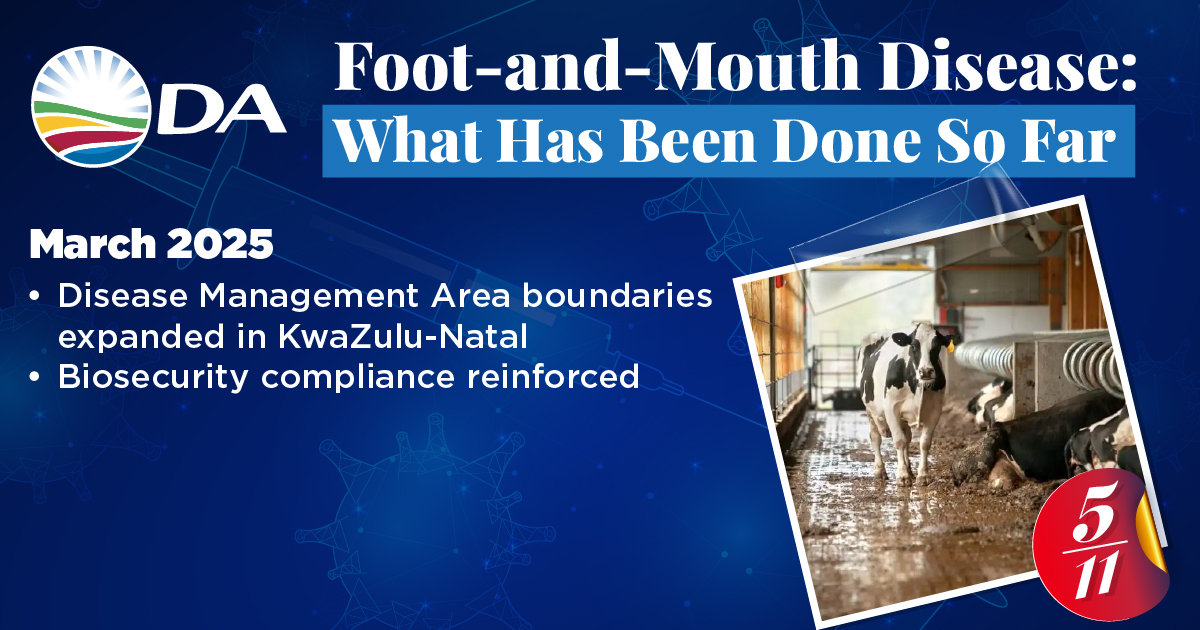
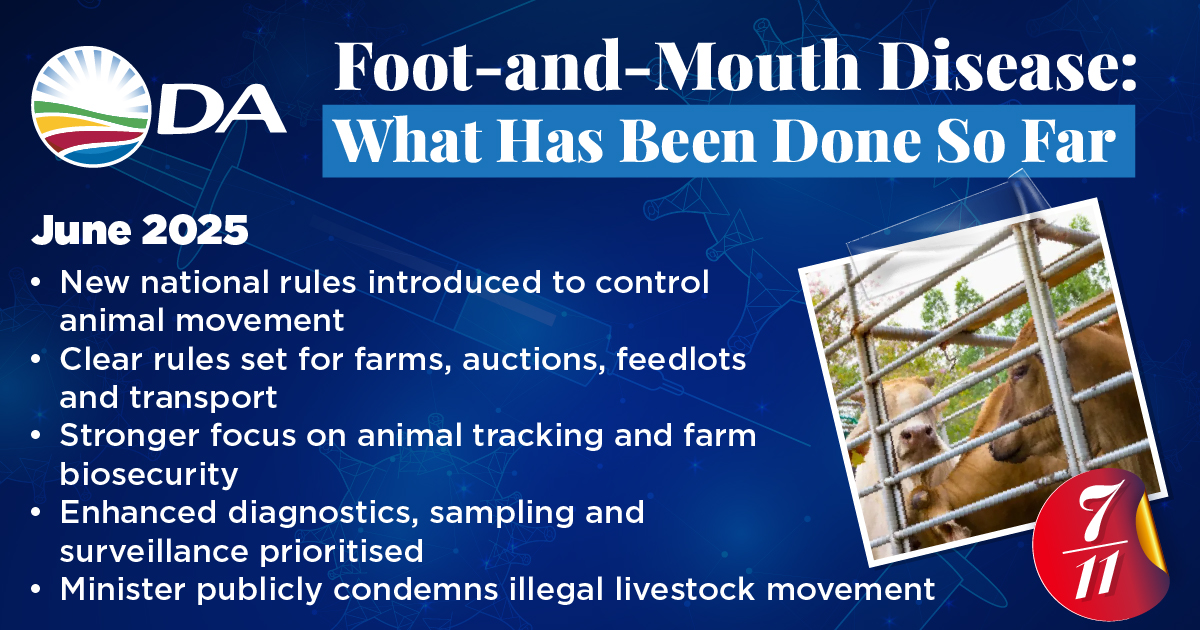
- Stricter enforcement of animal movement rules is being rolled out, with additional policing support under a State of Disaster.
Tracking and long-term control
- A digital livestock tracking system is being implemented to record animal movement and vaccination.
- The goal is to reduce outbreaks by more than 70% in high-risk provinces within 12 months, and restore South Africa’s FMD-free status over time.
Help is on the way.
Why this response is different
In the past, South Africa struggled with:
- vaccine shortages,
- slow testing,
- poor coordination,
- weak enforcement.
The current DA-led response focuses on:
- securing enough vaccine supply,
- speeding up testing,
- coordinating nationally,
- enforcing rules fairly,
- planning for long-term eradication.
This is about fixing systems, not managing crises forever.
What success looks like
In the short term
- Fewer new outbreaks
- Better protection of herds
- Stronger enforcement
In the medium term
- Outbreaks reduced by more than 70% in high-risk areas
- Stable farming operations
- Restored confidence
In the long term
- South Africa becomes FMD-free
- Export markets reopen
- Farmers, workers and communities benefit
FAQ
farmers order their own vaccines from suppliers?
No.
The ordering, supply and movement of Foot-and-Mouth Disease vaccines are regulated by the state to protect biosecurity.
Industry bodies may procure vaccines through government-regulated mechanisms, in coordination with the Department of Agriculture and veterinary authorities.
This ensures vaccines are correctly matched, safely distributed and properly recorded.
How do farmers report suspected Foot-and-Mouth Disease?
Suspected cases must be reported immediately to the provincial state veterinarian.
If a farmer reports a suspected case to a private veterinarian, that veterinarian must ensure the state veterinarian is informed without delay.
Early reporting is critical to containing outbreaks and protecting neighbouring farms.
Is there a cost for farmers to get vaccines for their cattle?
Vaccination campaigns form part of the national containment strategy led by the Department of Agriculture.
Details on cost arrangements, access and coordination with industry and private veterinarians will be communicated by the Department as implementation progresses.
Farmers are encouraged to follow official updates and guidance.
Once a cow has Foot-and-Mouth Disease, does it still need to be vaccinated?
Vaccination decisions are made under veterinary guidance and depend on the stage of infection, outbreak conditions and control strategy in the area.
Farmers should not vaccinate infected animals without veterinary instruction and must follow guidance from state or private veterinarians working with the Department.
If a cow is infected with Foot-and-Mouth Disease, is the meat safe to eat or milk safe to drink?
Animals infected with Foot-and-Mouth Disease are subject to movement controls and veterinary instructions.
Meat and milk from infected animals may not be sold or moved unless cleared under official veterinary protocols.
Food safety decisions are governed by strict regulations to protect consumers and the agricultural value chain.
If a cow is vaccinated, is the meat safe to eat and milk safe to drink?
Yes.
Vaccination does not make meat or milk unsafe.
Vaccinated animals can continue to produce safe meat and milk, provided all movement and veterinary regulations are followed.
Can only state veterinarians administer Foot-and-Mouth Disease vaccines?
No.
Government is working with private veterinarians and animal health technicians to ensure there is enough capacity to meet vaccination targets.
Vaccination remains coordinated under official veterinary control to ensure safety, traceability and effectiveness.
DA action on the ground